Table of Contents
ToggleToddlers tools aren’t just toys, they’re gateways to learning, confidence, and motor skill development. Young children naturally want to mimic adults. They see parents hammering, digging, and building. They want to join in. The good news? You can let them.
Introducing toddlers to real tools creates hands-on learning opportunities. It teaches cause and effect. It builds coordination. And yes, it keeps them busy while you actually get things done. This guide covers why toddlers love tools, which ones work best for their age, and how to keep everyone safe during the process.
Key Takeaways
- Toddlers tools support motor skill development, build confidence, and satisfy children’s natural desire to imitate adults.
- Choose real, child-sized tools over plastic toys—metal trowels, lightweight hammers, and thick-grip screwdrivers work best for small hands.
- Start with low-risk options like gardening tools and wooden mallets, then introduce more complex tools as your child grows.
- Establish clear safety rules, use protective gear like gloves and safety glasses, and always supervise within arm’s reach.
- Keep tool sessions short (15-20 minutes) and create achievable projects to build your toddler’s sense of accomplishment.
- Hands-on activities with toddlers tools improve cognitive development and problem-solving skills that benefit children for years.
Why Toddlers Love Using Real Tools
Toddlers tools satisfy a deep developmental need. Children between ages two and four are in a phase called “sensitive period for order and movement.” They crave repetition, routine, and physical activity. Tools check all those boxes.
Watch a toddler with a hammer. They’ll pound the same nail (or peg) over and over. It’s not boring to them, it’s satisfying. Each swing builds muscle memory. Each success releases dopamine. They’re learning through repetition, and they love it.
Real tools also give toddlers a sense of importance. Plastic imitation tools don’t hit the same. Kids know the difference. When they hold something that actually works, their eyes light up. They feel included in “grown-up” activities. This boosts self-esteem and encourages independence.
There’s also the sensory aspect. Metal, wood, soil, these textures engage a toddler’s senses in ways that plastic can’t. The weight of a real trowel or the resistance of soil against a rake provides feedback that helps children understand how the physical world works.
Studies show that hands-on activities improve cognitive development in early childhood. A 2019 study from the University of Cambridge found that children who engaged in practical life activities showed better problem-solving skills by age five. Toddlers tools aren’t just fun, they’re building blocks for future learning.
Best Types of Tools for Toddlers
Not all tools are appropriate for small hands. The best toddlers tools are functional, properly sized, and safe. Here’s what works.
Child-Sized Hand Tools
Forget the toy aisle. Look for real tools scaled down for children. Several companies make quality child-sized versions of adult tools.
Hammers should weigh between 4-8 ounces with short handles (around 8-10 inches). Wooden mallets work well for beginners. They’re lighter and less likely to cause injury if they miss the target.
Screwdrivers with thick, easy-grip handles let toddlers practice twisting motions. Phillips head screwdrivers work better than flathead for little ones, they stay in the screw groove more easily.
Hand saws might sound scary, but child-safe versions exist. Look for saws with rounded teeth that can cut soft materials like foam or balsa wood but won’t easily cut skin.
Pliers and wrenches sized for small hands help with grip strength. Needle-nose pliers let toddlers pick up small objects and practice fine motor control.
Gardening Tools for Little Helpers
Gardening introduces toddlers tools in a low-pressure environment. Soil is forgiving. Plants are patient teachers.
Trowels and hand shovels should be metal, not plastic. Plastic bends and breaks, which frustrates kids. A small metal trowel with a wooden handle lasts longer and actually moves dirt.
Watering cans with small capacities (half-gallon or less) let toddlers help without making huge messes. Look for wide spouts that don’t require precise aim.
Rakes scaled for children teach coordination and rhythm. Mini leaf rakes also make cleanup feel like a game.
Wheelbarrows built for kids let them haul leaves, dirt, or toys around the yard. The pushing and balancing action develops gross motor skills.
Brands like Montessori Services, Melissa & Doug’s real-tool line, and Toysmith offer quality options. Expect to pay $15-40 for individual tools or $30-75 for sets.
Safety Tips for Toddler Tool Use
Safety comes first with toddlers tools. Young children lack impulse control and spatial awareness. They need protection and boundaries.
Start with low-risk tools. Gardening tools, wooden mallets, and blunt-tipped screwdrivers pose minimal danger. Save sharper or heavier tools for ages four and up.
Establish clear rules. Toddlers understand simple instructions: “We only use the hammer at the workbench.” “Tools stay outside.” “Always put tools back when finished.” Repeat these rules every single time.
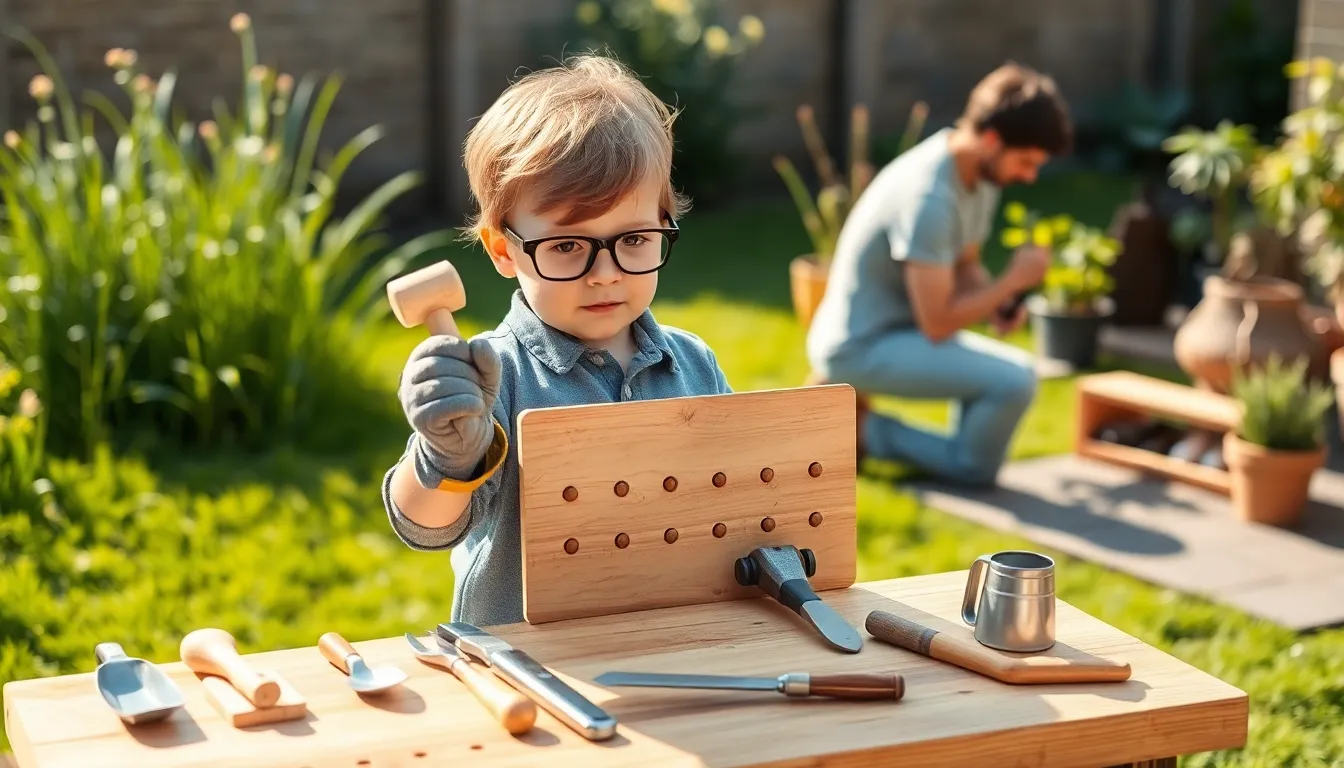
Use appropriate workstations. A child-height workbench or sturdy outdoor table gives toddlers a dedicated space for tool use. This creates physical boundaries and makes supervision easier.
Protect hands and eyes. Child-sized work gloves prevent splinters and blisters. Safety glasses protect against flying debris. Most kids actually enjoy wearing this gear, it makes them feel official.
Store tools properly. Toddlers tools should live in a designated spot, out of reach when not in use. This prevents unsupervised “projects” and teaches responsibility.
Know your child. Some toddlers are cautious. Others are daredevils. Match tool access to your child’s temperament. A careful three-year-old might handle more than an impulsive four-year-old.
Keep first aid nearby. Minor scrapes happen. Having bandages and antiseptic within reach means small injuries don’t derail the whole activity.
How to Supervise Toddlers With Tools
Supervision doesn’t mean hovering. It means active, engaged presence. Here’s how to do it well.
Be within arm’s reach. With toddlers tools, stay close enough to intervene instantly. This isn’t the time to check your phone or chat with neighbors. Your attention should be on the child.
Demonstrate first. Show toddlers how to use each tool before handing it over. Use slow, exaggerated movements. Narrate what you’re doing: “I hold the hammer here. I swing down like this. I hit the nail.”
Let them struggle (a little). Resist the urge to take over when they fumble. Struggle builds problem-solving skills. Step in only when frustration peaks or safety is at risk.
Work alongside them. Toddlers learn best through imitation. When parents or caregivers work with their own tools nearby, children copy those behaviors. This also makes the activity feel collaborative rather than supervised.
Keep sessions short. Toddlers have limited attention spans. Fifteen to twenty minutes of tool use is plenty for most two to three-year-olds. End the session before meltdowns start.
Praise effort, not results. “You’re working so hard.” beats “Good job.” Focusing on process rather than outcome encourages persistence and reduces performance anxiety.
Create projects with achievable goals. Pounding golf tees into a styrofoam block. Digging a hole for a plant. Turning a single screw. Small, completable tasks give toddlers tools a purpose and deliver that satisfying feeling of accomplishment.