
Table of Contents
ToggleTop toddlers don’t just happen by accident. Between ages one and three, children experience dramatic changes in how they move, think, communicate, and connect with others. These early years shape the foundation for lifelong learning and health.
Parents often wonder if their child is hitting the right milestones at the right time. The good news? Most toddlers develop at their own pace, and variation is completely normal. Still, understanding what to expect helps caregivers provide the right support and spot potential concerns early.
This guide breaks down the key areas of toddler development, physical, language, social-emotional, and cognitive, and offers practical ways to encourage growth. Whether a child is taking first steps or stringing together sentences, every milestone matters.
Key Takeaways
- Top toddlers develop physical, language, social-emotional, and cognitive skills rapidly between ages one and three, forming the foundation for lifelong learning.
- Most toddlers walk independently by 12–15 months and speak in complete sentences by age three, though individual development timelines vary.
- Reading daily, talking constantly, and singing songs are simple yet powerful ways to boost your toddler’s language development.
- Temper tantrums peak around age two and are a normal part of emotional development—not a sign of bad parenting.
- Limit screen time to one hour daily of educational content for toddlers ages two to five, as recommended by the American Academy of Pediatrics.
- Consult a pediatrician if your toddler isn’t walking by 18 months, uses fewer than six words, or loses previously acquired skills.
Physical Development in Toddlers
Physical development in toddlers happens fast. One day they’re crawling, and the next they’re running across the living room.
Gross Motor Skills
Gross motor skills involve large muscle groups. Top toddlers typically walk independently between 12 and 15 months. By age two, most can run, kick a ball, and climb stairs with help. At three, many can pedal a tricycle and jump with both feet.
These skills don’t develop overnight. Toddlers need plenty of space to move and explore. Outdoor play, playground visits, and simple games like chase help strengthen muscles and improve coordination.
Fine Motor Skills
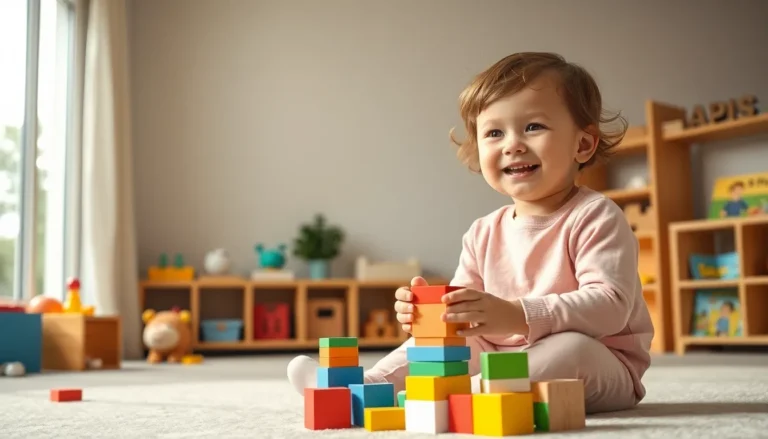
Fine motor skills use smaller muscles in the hands and fingers. Around 12 months, toddlers start stacking blocks, usually two or three at first. By 18 months, they can scribble with crayons. Two-year-olds often turn pages in a book and use a spoon with reasonable success.
Activities like playing with playdough, sorting shapes, and finger painting build these abilities. The key is offering age-appropriate challenges without frustration.
Physical Milestones to Watch
| Age | Typical Milestones |
|---|---|
| 12 months | Pulls to stand, walks with support |
| 18 months | Walks alone, begins running |
| 24 months | Kicks ball, climbs furniture |
| 36 months | Pedals tricycle, catches large ball |
Every toddler develops differently. Some hit milestones early while others take more time. But, significant delays warrant a conversation with a pediatrician.
Language and Communication Skills
Language development in toddlers is nothing short of remarkable. A one-year-old might say a few words. By three, many children speak in complete sentences.
Vocabulary Growth
Top toddlers build vocabulary quickly. Most say their first words around 12 months, usually “mama,” “dada,” or “no.” By 18 months, they know approximately 50 words. The vocabulary explosion happens around age two, when toddlers learn new words almost daily.
At three years old, most toddlers use 200 to 1,000 words. They ask questions constantly. “Why?” becomes a favorite.
Sentence Formation
Toddlers progress from single words to two-word phrases around 18 to 24 months. “More milk” and “daddy go” are common examples. By age three, many children form sentences of four to five words and use pronouns correctly.
Grammar errors are normal and even cute. “I goed to the store” shows a toddler is learning language rules, they just haven’t mastered exceptions yet.
How to Encourage Language Development
- Read daily. Picture books expose toddlers to new words and concepts.
- Talk constantly. Describe activities, name objects, and narrate the day.
- Listen actively. Give toddlers time to respond without rushing them.
- Sing songs. Repetitive lyrics help toddlers learn patterns and vocabulary.
Children who aren’t using two-word phrases by age two or who lose language skills they previously had should be evaluated by a specialist.
Social and Emotional Growth
Social and emotional development shapes how toddlers interact with others and manage their feelings. This area often challenges parents the most, hello, tantrums.
Emotional Awareness
Top toddlers experience big emotions. They feel joy, frustration, fear, and anger intensely. But, they lack the skills to regulate these feelings. That’s why a broken cracker can trigger a meltdown.
Between one and two years, toddlers begin recognizing emotions in others. They might comfort a crying friend or laugh when someone else laughs. By three, many can name basic feelings like happy, sad, and mad.
Social Skills Development
Toddlers start with parallel play, playing alongside other children without direct interaction. True cooperative play usually emerges closer to age three.
Sharing is hard for toddlers. Their brains aren’t developmentally ready for it until around age three or four. Forcing sharing too early often backfires. Instead, teach taking turns with guidance.
Building Emotional Intelligence
Parents can help toddlers develop emotional skills by:
- Naming emotions: “You look frustrated because the tower fell down.”
- Validating feelings: “It’s okay to feel sad.”
- Modeling regulation: Show calm responses to stress.
- Creating routines: Predictability reduces anxiety in toddlers.
Temper tantrums peak around age two. They’re a normal part of development, not a sign of bad parenting.
Cognitive Development and Learning
Cognitive development in toddlers involves thinking, learning, and problem-solving. Their brains are working overtime during these years.
Problem-Solving Skills
Top toddlers love figuring things out. Around 12 months, they experiment with cause and effect, dropping toys repeatedly to watch them fall. By 18 months, they solve simple problems like fitting shapes into a sorter.
Two-year-olds begin symbolic thinking. A banana becomes a phone. A box becomes a car. This imaginative play signals major cognitive growth.
Memory and Attention
Toddler attention spans are short, typically two to five minutes per year of age. A two-year-old might focus on an activity for four to ten minutes before moving on.
Memory improves steadily. One-year-olds remember familiar faces and routines. By three, toddlers recall events from days or weeks ago and anticipate daily schedules.
Encouraging Cognitive Growth
- Offer choices. “Do you want the red cup or blue cup?” builds decision-making skills.
- Play pretend. Imaginative play strengthens abstract thinking.
- Ask open-ended questions. “What do you think will happen?” promotes reasoning.
- Provide puzzles and games. Age-appropriate challenges stimulate problem-solving.
Screen time should be limited for toddlers. The American Academy of Pediatrics recommends no more than one hour daily for children ages two to five, with educational content only.
Supporting Your Toddler’s Development
Every child develops at their own pace. But parents and caregivers play a critical role in creating environments where toddlers thrive.
Create a Safe Space to Explore
Top toddlers learn through exploration. They need safe spaces to climb, run, and investigate. Childproofing allows freedom without constant “no’s.”
Outdoor time matters too. Nature provides sensory experiences that indoor environments can’t replicate. Dirt, grass, water, and sand all offer learning opportunities.
Establish Consistent Routines
Toddlers feel secure with predictable schedules. Regular mealtimes, nap times, and bedtime routines reduce stress and tantrums. When toddlers know what comes next, they cope better with transitions.
Prioritize Connection
Quality time beats quantity. Even 15 minutes of focused, phone-free interaction makes a difference. Get on the floor. Follow the toddler’s lead in play. Make eye contact during conversations.
Know When to Seek Help
Most developmental variations are normal. But, parents should consult a pediatrician if their toddler:
- Isn’t walking by 18 months
- Uses fewer than six words by 18 months
- Doesn’t respond to their name
- Loses skills they previously had
- Shows no interest in other children by age three
Early intervention programs can address delays before they become larger challenges. Trust parental instincts, caregivers know their children best.